
What is Natural Growth Factor?
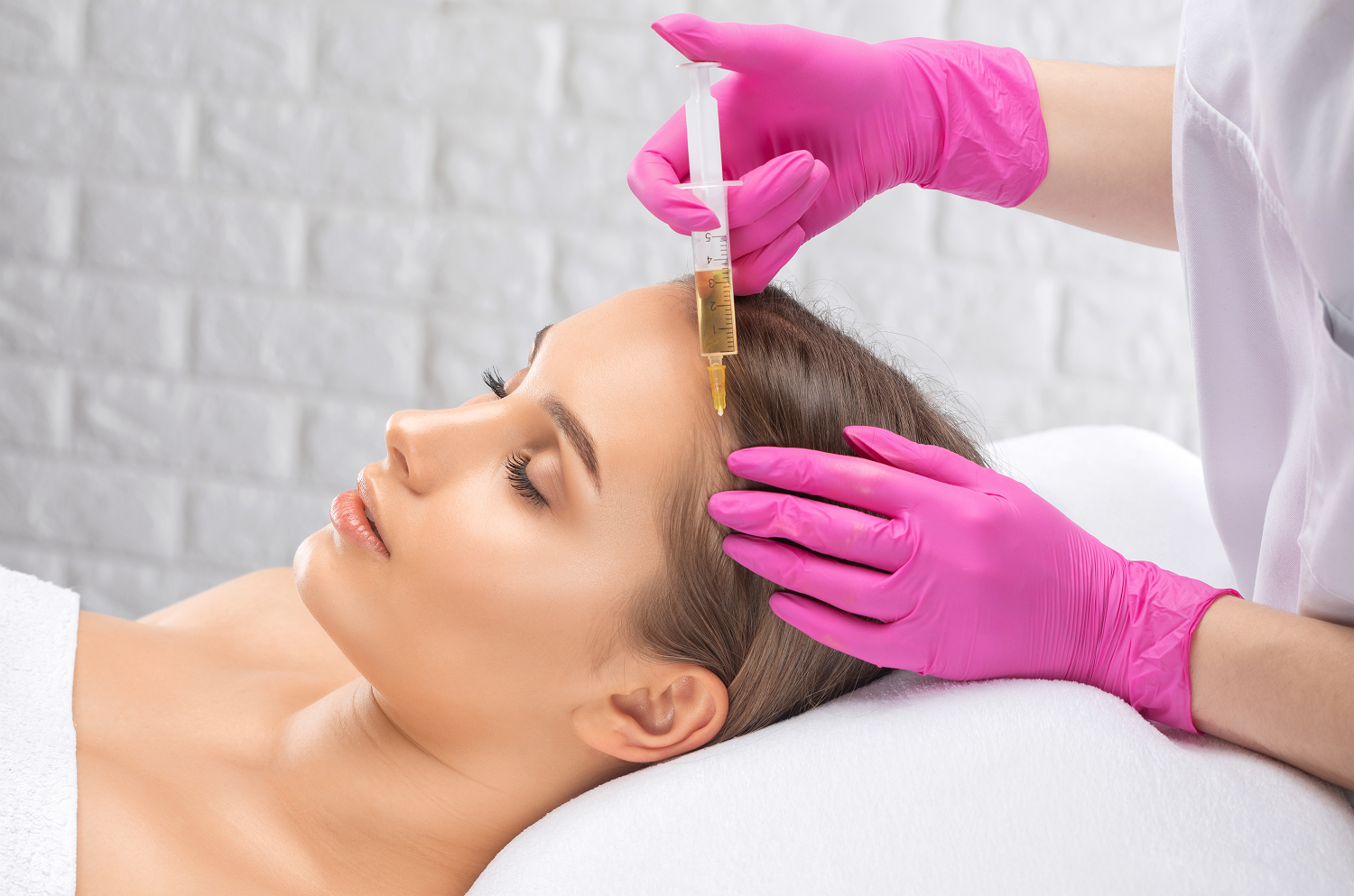
Our Natural Growth Factor treatment concentrates the healing properties in your blood to create more collagen in the skin, reducing the effects of fine lines and wrinkles and has been show to re-activate hair growth in patients who’s follicle growth has slowed/stopped within the last 5 years.
How does it work?
Natural Growth Factor Treatments are fast and simple:
Our clinician will start by taking your blood
Your blood is then spun to separate out growth factors
We then separate the the growth factors by efficacy (High/Low)
Then we inject into treatment areas
Treatments
SkinPen Microneedling + Growth Factor - Add growth factors to your microneedling treatment to boost collagen production and healing. Results can be seen in as little as 3 treatments, however most clients see the best results from 6 treatments (1 month apart)
Growth Factor Hair Restoration - growth factor is injected into the scalp in areas of slow/no hair growth. Best results seen when following a treatment plan of 6 treatments spaced about a month apart
Growth Factor Under Eye - Growth Factors are injected in the area under the eye, reducing the effects of fine lines and wrinkles and under eye hollow. As with other growth factor treatments, a course of 6 treatments will see the best results.
Pricing
Get up to 20% off with a membership! Click here for details
Microneedling Growth Factor Add-On
$400/Treatment
On Special $300
Growth Factor Under Eye
$650/Treatment
On Special $500
Growth Factor Hair Restoration
$1000/Treatment
On Special $800
Purchase a package of 3 or 6 and save even more!!
Growth Factor Under Eye - 3 Treatments
Growth Factor Under Eye - 6 Treatments
On Special $2000
$1950/Treatment
On Special $1200
$3900/Treatment
Growth Factor Hair Restoration - 3 Treatments
Growth Factor Hair Restoration - 6 Treatments
On Special $3850
$3000/Treatment
On Special $2150
$6000/Treatment
Frequently Asked Questions
-
PRP (platelet-rich plasma) is a concentrated portion of your own blood that contains platelets and signaling proteins (“growth factors”) that can support skin and scalp rejuvenation. The PRP process typically involves a quick blood draw, spinning the sample in a centrifuge, and then applying or injecting the PRP into targeted areas.
-
PRP is commonly used to support: (1) hair restoration for thinning hair, (2) skin texture and “glow” when paired with microneedling (aka “vampire facial”), (3) fine lines and overall skin quality, and (4) concerns around the under-eye area like texture and crepiness. Research is still evolving, and results depend on the concern being treated, the technique, and your baseline skin/scalp health.
-
PRP can be effective for the right candidate and concern, but it’s not a one-size-fits-all solution. Evidence is strongest in some categories (like certain types of hair loss) and more mixed in others (like broad “anti-aging” claims). A good rule: PRP tends to work best as a “biostimulator” over time—think gradual improvement in quality rather than instant transformation.
-
PRP may improve under-eye skin quality (texture/crepiness) and sometimes the appearance of dark circles in select patients. If “hollowness” is primarily structural (tear trough anatomy), PRP may be supportive but not identical to a volumizing filler result. Some studies have evaluated PRP for periorbital dark circles and fine lines, with variable outcomes.
-
For acne scarring, multiple reviews show PRP can improve outcomes when combined with microneedling or laser compared with those treatments alone in many studies, though study quality varies and protocols differ. In practice, PRP is often used to enhance microneedling rather than replace it.
-
Most patients do best with a series rather than a single session. Many protocols are 3–6 sessions spaced about 4–6 weeks apart, followed by maintenance depending on your goals (commonly every 6–12 months for skin or every few months for hair, depending on the plan). Your exact number depends on the concern, severity, and whether PRP is paired with microneedling.
-
PRP is a gradual process. Some people notice early changes (like improved hydration/glow) within a few weeks, but collagen remodeling and hair-cycle changes take longer. Peak benefit is often discussed in the 3–6 month range, depending on the indication and treatment plan.
-
Results vary by person, concern, and whether you do maintenance. Many patients plan periodic maintenance sessions because your skin/scalp continues to age and hair loss drivers may persist. For “vampire facial” style treatments, many sources describe effects lasting months and often recommend maintenance within 6–12 months for ongoing benefits.
-
“Vampire facial” usually refers to microneedling with PRP (PRP is applied topically and/or delivered into the skin via channels created by microneedling). It’s popular for texture, fine lines, and post-acne marks—again, with gradual results.
-
Expect a quick blood draw and then either microneedling and/or small injections. Most aesthetic protocols use topical numbing for comfort. You may feel pressure, scratching (microneedling), or brief “pinches” (injections), plus post-treatment tightness similar to a mild sunburn for a day or two.
-
Common short-term effects include tenderness, redness, swelling, and bruising at the treatment site. Major complications are uncommon when performed properly, but any procedure involving needles carries risks such as infection, prolonged swelling/bruising, or (rarely) scarring.
-
PRP uses your own blood, but safety depends on sterile technique and proper infection control. Serious infections are rare in licensed medical settings, but outbreaks have occurred when unsafe practices were used (e.g., reusing equipment). Choose a reputable clinic that follows strict sterile protocols.
-
Good candidates generally want a more “natural” regenerative approach, understand results are gradual, and are willing to do a series. For hair: PRP often works best when thinning is early-to-moderate and follicles are still functioning. For skin: best for texture, early fine lines, and overall quality improvements rather than dramatic lifting.
-
You should discuss PRP carefully with your provider if you have: a bleeding or platelet disorder, active infection, are on anticoagulants, or have medical conditions that significantly affect healing. Some sources also advise caution/avoidance with active cancer or certain histories, depending on treatment area and medical guidance. When in doubt, medical clearance is the right move.
-
Many clinics avoid elective PRP during pregnancy out of caution. For breastfeeding, available summaries note professional guidance generally does not list PRP as a contraindication, but individual risk/benefit should be discussed with your clinician.
-
Common prep tips include:
• Hydrate well and eat beforehand (helps reduce lightheadedness from the blood draw).
• Avoid anti-inflammatory meds (NSAIDs) like ibuprofen/naproxen beforehand if medically appropriate (always check with the prescribing clinician before stopping any medication).
• Arrive with clean skin (no makeup/lotions) if treating the face. -
Typical aftercare depends on whether PRP is injected, paired with microneedling, or both. Common guidance includes:
• Expect redness/tightness for 24–72 hours after microneedling + PRP.
• Avoid intense workouts/heat exposure for a short window if you’re swollen or very flushed.
• Avoid unprotected sun exposure and use sunscreen once your provider says it’s safe (sun can worsen irritation and pigment). -
Many people return to normal activities within 24 hours, but bruising (if you’re prone) can last longer, sometimes 1–2 weeks if injections are involved. For microneedling + PRP, visible redness is often 1–3 days.
-
PRP has been used in medicine for years, but PRP for aesthetic rejuvenation is an area where evidence and regulatory framing can be confusing. The American Academy of Dermatology notes that research on PRP for younger-looking skin is still limited, and outcomes vary.
-
PRP is platelet-rich plasma (more liquid), while PRF (platelet-rich fibrin) forms a fibrin matrix that may release growth factors more slowly over time. Some literature comparing PRP vs PRF in aesthetic contexts suggests both can help skin quality, with different strengths depending on the indication, but results and protocols vary. If you’re specifically looking for PRF, note that not every clinic carries it.
-
It depends on your goal. Here are common alternatives people compare to PRP:
• PDGF / lab-formulated growth factor treatments: Often positioned as a consistent, “ready-to-use” growth factor option (not drawn from your blood). Great for patients who don’t want a blood draw or want a skincare-based approach.
• Microneedling alone: Strong option for texture and acne scars; PRP is sometimes an “amplifier.”
• Biostimulators (e.g., collagen stimulators), lasers, peels, medical-grade skincare: Best choice depends on whether your main issue is pigment, laxity, texture, volume loss, or scarring.
• Hair loss alternatives: topical/oral minoxidil, finasteride (when appropriate), nutraceuticals, low-level laser, or transplant consults (based on pattern and severity). -
Often, yes. PRP is commonly paired with other modalities depending on your plan (for example, PRP + microneedling for texture, or PRP in a broader rejuvenation plan). Timing matters: some treatments are best spaced out to reduce swelling and optimize healing, so a customized schedule is important.
-
Look for a medical setting with trained clinicians, clear sterility protocols, single-use supplies where appropriate, and transparent medical screening. PRP is technique-dependent, and safety depends heavily on infection control and proper handling of blood products.
-
Ask:
• What type of PRP protocol do you use (spin method, concentration goals)?
• Is PRP injected, applied after microneedling, or both?
• How many sessions do you recommend for my concern and why?
• What aftercare do you want me to follow (products, exercise, sun, makeup)?
• What alternatives would you consider if my main issue is pigment/volume/laxity/scarring?
Interested?
Click the book button to schedule a consultation or book a session, and our expert medical professional will listen to your concerns and advise you on a treatment plan that’s right for you.